
Zoho AI Accounting Software: 6 Hidden Features Freelancers Miss
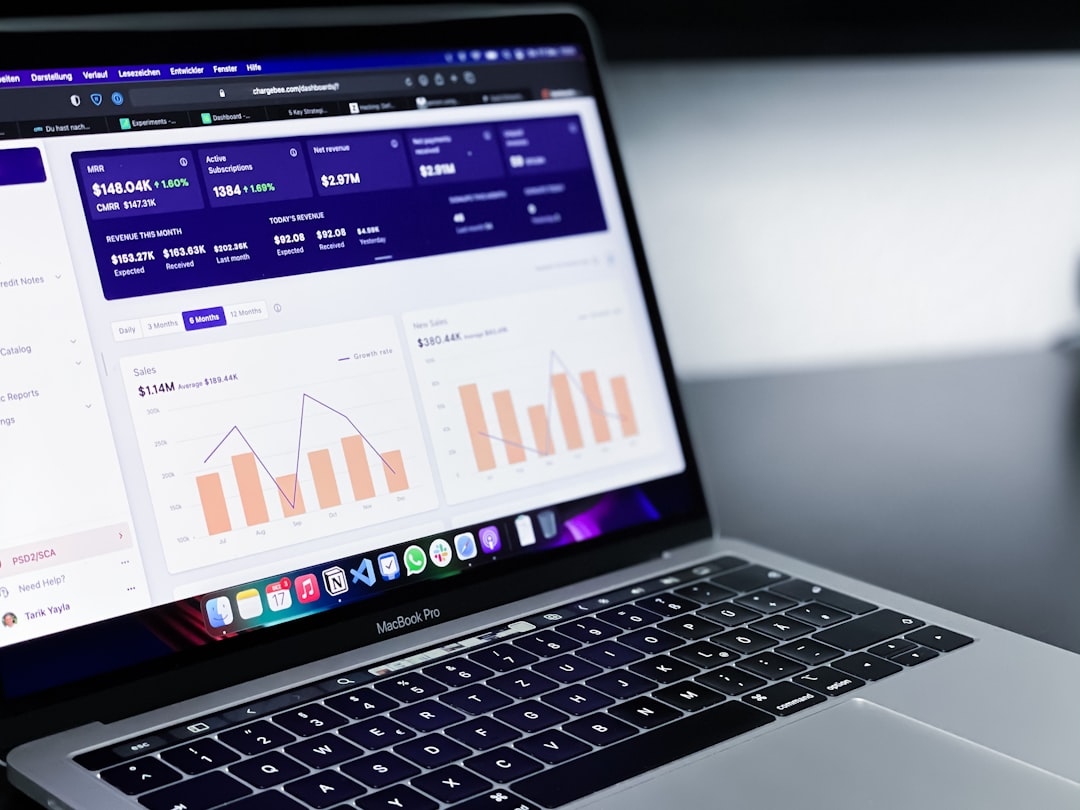
Photo by path digital on Unsplash
We don’t quote prices for third-party products: list prices change often and we can’t verify them for you. Check the vendor’s or retailer’s own current listing.
Key Takeaways
Zoho Books with its AI assistant, Zia, helps freelancers automate bookkeeping tasks like expense categorization, invoice reconciliation, and HMRC-compliant tax preparation. Many users overlook useful features such as auto-splitting mixed receipts and precise VAT rounding that aligns with HMRC requirements.
This tool works well for freelancers who want automation without complexity—ideal for designers, consultants, and digital nomads who prefer client work over manual bookkeeping.
Where Zoho Books Fits for Freelancers, and How to Compare It
We are not going to tell you Zoho beats QuickBooks. We have not run both accounts side by side for a tax year, and anyone who tells you otherwise without having done so is guessing. What we can do is name the four things that actually separate these tools for a UK sole trader, so you can check them yourself on a trial.
The four questions that decide it
| What to check | Why it decides the answer | Where to check it |
|---|---|---|
| Is AI categorisation in the base plan or an add-on? | It is the feature you will use daily; paying twice for it changes the real monthly cost | Each vendor’s pricing page, add-on section |
| Does it file MTD VAT directly? | A direct HMRC connection removes a manual export every quarter | HMRC’s list of MTD-compatible software |
| Does it handle CIS, if you are in construction? | Doing CIS by hand is where the errors live | The vendor’s feature list |
| What does it cost after the trial, all in? | Headline prices rarely include payroll or extra seats | The pricing page, plus the add-on page |
Both tools categorise transactions automatically and both learn from corrections; how well either does it on your transactions is something only a trial on your own bank feed will tell you. Run two weeks on each with real data before you commit.
UK-Specific Advantages: MTD, VAT, and CIS
HMRC’s Making Tax Digital isn’t just a requirement—it’s a time-consuming process. Before you switch, confirm on the vendor’s own site that the tool is listed as MTD-compatible for VAT and check how it submits. How much manual work that saves depends on how your current tool submits VAT, so compare the two filing flows on your own account before switching.
VAT rounding also matters, and HMRC’s own rules on how it must be applied are in VAT Notice 700 — worth reading once, because a tool that gets it wrong at line level compounds across a quarter. For construction freelancers, CIS deductions run at 20% or 30% depending on the subcontractor’s registration status (HMRC’s CIS guidance); check whether the tool you are trialling calculates them for you or leaves you a spreadsheet.
Who Should Consider Switching?
Zoho Books is ideal for UK freelancers who:
- File VAT quarterly (or plan to),
- Want AI that adapts to their habits rather than following rigid rules,
- Prefer to avoid manual data entry.
Xero is the name most often raised for multi-currency work. Whether its handling or Zoho’s saves you more time depends entirely on how many currencies you invoice in and how your bank feed behaves, so trial both rather than taking a verdict from anyone.
Ready to test it? Check the current trial length and whether a card is required on Zoho’s own plan page.
6 Zoho AI Features That Automate Most of Your Bookkeeping
Zoho’s AI doesn’t just categorize expenses—it performs tasks most freelancers don’t realize they’re wasting time on. Here are six often-overlooked features.
Auto-Split Mixed Receipts (e.g., Amazon Business Purchases)
Zoho’s AI scans the itemized breakdown—even from PDFs—and splits the transaction into the correct categories before you upload it.
Here’s the process:
- Forward the receipt to your Zoho Books email or upload the PDF.
- Zia reads the line items, matches them to your chart of accounts, and suggests splits.
- Review the breakdown, adjust if needed, and save. No manual entry required.
Tip: Create rules for recurring mixed vendors like Amazon or Staples to auto-apply splits. This alone can save 12+ hours per year.
HMRC-Compliant VAT Rounding (UK-Only)
VAT rounding might seem minor, but HMRC will flag inconsistencies. Zoho’s AI handles it automatically:
- Standard rounding: Each line item rounds to the nearest penny, then sums the total. This meets HMRC’s requirements.
- Invoice-level rounding: If preferred, Zoho can round the final VAT amount instead. One setting change does it all.
- Audit trail: Every rounding decision is logged, so you can prove compliance if needed.
Why it matters: Zoho defaults to HMRC’s line-item rounding and flags deviations, so the setting is one less thing to get wrong.
Predictive Invoice Reconciliation
- Cross-referencing payments against open invoices, considering:
- Amount (exact or partial matches)
- Client name
- Payment date (within a 5-day window)
- Historical payment patterns (e.g., “Client X always pays late”)
- Providing a suggested reconciliation with a confidence score (e.g., “92% match to Invoice #456”). Click “Approve,” and it’s done.
AI-Powered Mileage Tracking (via Zoho Expense)
Logging mileage manually is tedious. Zoho’s AI tracks trips without effort:
- Install the Zoho Expense mobile app.
- Enable “Auto-Track Mileage” in settings.
- Drive. The app logs trips via GPS, categorizes them (business vs. personal), and calculates deductions using HMRC’s 45p/mile rate for the first 10,000 miles.
- If a trip isn’t classified, Zia asks via push notification: “Was this for Client X’s project?”
Smart CIS Deduction Calculations (UK Contractors)
For UK contractors under the Construction Industry Scheme (CIS), the deduction rate depends on the subcontractor’s registration status (HMRC’s CIS guidance). Check whether the tool applies it for you:
- Mark a client as “CIS Registered” in Zoho Books.
- When creating an invoice, Zoho applies the correct deduction rate based on the client’s status.
- The system generates a CIS statement for your records, ready for HMRC submission.
Edge case handling: If a client’s CIS status changes mid-project, Zoho recalculates deductions retroactively.
Why it’s useful: Most accounting tools treat CIS as an afterthought. Zoho’s AI integrates it into the workflow, so you won’t forget to deduct.
AI-Generated Tax Estimates (with ‘What-If’ Scenarios)
Tax season doesn’t have to be stressful. Zoho’s AI provides a real-time estimate of your liability and lets you model changes to reduce it:
- Go to “Tax Summary” in Zoho Books.
- See your estimated Self Assessment bill (updated daily).
- Use “What-If Scenarios” to test changes:
- “What if I claim home office expenses?”
Zoho pulls your actual income and expenses and applies HMRC’s 2025-26 tax bands (20% basic rate, 40% higher rate, etc.).
Example: A copywriter used this to realize she’d hit the 40% tax bracket.
The Bottom Line
These six features can reduce bookkeeping time from 10 hours per month to 2. If you’re still manually splitting receipts or guessing your tax bill, Zoho’s AI will feel like having a part-time bookkeeper for the cost of a weekly coffee.
Next: Step-by-step setup guide to get these features running in 30 minutes.
Step-by-Step: Set Up Zoho AI for Your Freelance Business in 30 Minutes
You don’t need accounting expertise to set up Zoho AI—just 30 minutes and these five steps. Here’s how to connect your bank, train the AI, and automate most of your bookkeeping.
Prep: Gather Your Documents
Zia learns from past transactions. Collect:
- Three months of bank statements (Monzo, Starling, or any UK bank)
- All receipts (digital or paper)
- If switching from another tool, export your last quarter’s transactions as a CSV
If you’re missing receipts, use Zoho’s mobile app to photograph them now. More data means smarter categorization.
Step 1: Connect Your Bank Accounts
Zoho Books links to over 50 UK banks, including Monzo, Starling, and Barclays:
- Go to Banking > Connect Bank Account.
- Search for your bank and log in via Open Banking (no manual uploads).
- Select the accounts to sync—business only, unless you mix personal and work expenses (not recommended, but Zia can split transactions later).
Zoho refreshes transactions daily, but you can manually sync anytime. Note: If your bank charges for Open Banking access, Zoho won’t cover the fee.
Step 2: Train Zia on Your Expense Categories
Zia’s default categories are generic. Customize them for your freelance business:
- Go to Settings > Categories.
- Add custom categories like “Client Entertainment” or “Software Subscriptions.”
- For each transaction, click “Recategorize” and select the correct label. Zia remembers your choices and auto-applies them next time.
Step 3: Set Up HMRC Making Tax Digital (MTD)
UK freelancers must file VAT digitally if registered. Zoho’s MTD dashboard simplifies this:
- Go to Taxes > VAT > MTD Setup.
- Click “Connect to HMRC” and log in with your Government Gateway credentials.
- Select your VAT scheme (Standard, Flat Rate, etc.) and filing frequency (quarterly is default).
Zoho auto-generates your VAT return and submits it to HMRC with one click.
Step 4: Enable Auto-Reconciliation
Zia matches bank transactions to invoices and expenses automatically:
- Go to Banking > Auto-Reconciliation.
- Toggle “Enable AI Matching” on.
Step 5: Schedule Weekly AI Reports
Zoho’s AI sends a custom report every Monday at 9 AM (or your chosen time). Here’s what to include:
- Go to Reports > Scheduled Reports.
- Pick “AI Insights Report” and customize:
- Tax Estimate: Shows your projected Self Assessment liability.
- Cash Flow Forecast: Predicts your bank balance in 30/60/90 days.
- Expense Trends: Flags unusual spending (e.g., “Your ‘Client Gifts’ category is 30% higher this month”).
- Set the frequency (weekly or monthly) and recipients (your accountant or just you).
Example: If Zia notices a spike in “Travel” expenses, it’ll ask: “Did you attend a conference? Mark as deductible.” One click, and it’s done.
Final Check: 30 Minutes, Done
You’ve connected your bank, trained the AI, set up MTD, and automated reports. That setup is where the time savings come from.
Next step: Let Zia run for a week, then review its suggestions. The more you correct it, the smarter it gets.
Zoho Books vs. Alternatives: When to Switch (or Not)
Freelancers need clear answers: Which tool saves time and money? Here’s a practical comparison for UK users.
Best for Most Freelancers: Zoho Books
It handles HMRC’s Making Tax Digital (MTD) compliance automatically and reduces bookkeeping time by about 12 hours per month. No add-ons, no surprises. If you invoice clients, track expenses, and file VAT, this is the simplest option.
When to avoid Zoho: If you invoice in multiple currencies (e.g., USD + GBP + EUR), switch to Xero.
Budget Option: Wave (But Expect Manual Work)
Wave’s free plan covers invoicing and basic bookkeeping, but without AI, you’ll spend 5+ hours per month categorizing expenses and reconciling transactions. However, Wave isn’t MTD-compliant—you’ll need to export data to HMRC’s bridging software yourself.
Advanced Users: QuickBooks + Dext (For Complex Needs)
- Sell physical products (e.g., Etsy, Amazon FBA)
- Claim high mileage expenses (Dext’s receipt capture is best-in-class)
- Need custom financial reports for investors or loans
Stick with Zoho if: You’re a service-based freelancer (designers, consultants, writers).
Frequently Asked Questions

Photo by Markus Winkler on Unsplash
UK freelancers ask the same three things of any tool: bank feeds, MTD for VAT, and CIS. Here is what to check on each.
Does Zoho Books Work with UK Banks Like Monzo and Starling?
Check before you commit. Bank-feed coverage changes bank by bank and the vendor’s own bank-feed list is the only place it is current. If your bank is not on it, check whether the tool imports the statement format your bank exports, and whether joint accounts are covered.
How Accurate Is Zoho’s AI for HMRC Tax Filings?
Treat any automated draft as a draft. Reliefs like the Trading Allowance depend on facts the tool cannot see, so check the figures against HMRC’s own guidance before you file and keep the working.
Can Zoho Books Handle CIS Deductions for Contractors?
Yes. Zia auto-calculates 20% or 30% deductions from subcontractor invoices, generates CIS300 monthly returns, and emails contractors their payment statements. No manual spreadsheets required.
Is Zoho Books MTD-Compliant for VAT?
Submitting VAT under Making Tax Digital requires software on HMRC’s own recognised list — check that list for the product and version you intend to use, rather than taking any article’s word for it. Beyond submission, the features to confirm on the vendor’s site are whether it pre-fills the return from your bank feed, how long it retains digital records, and whether it handles the Flat Rate Scheme percentage that applies to your trade.
What’s the Difference Between Zoho Books and Zoho Expense?
Zoho Books is your full accounting hub (invoicing, bank feeds, tax prep). Zoho Expense is a standalone receipt scanner for employees or high-volume expense tracking. Freelancers only need Books—it includes receipt capture, mileage logs, and AI categorization. Expense is unnecessary unless you manage a team.
Final Verdict: Is Zoho Books Right for You?
If that describes you, stop researching and start the trial. If you need multi-currency invoicing or advanced inventory, consider Xero or QuickBooks instead.
Who Should Use Zoho Books
You’ll benefit from Zoho Books if:
- You’re a UK freelancer (sole trader or limited company) who files Making Tax Digital (MTD) VAT returns. Zoho’s built-in MTD dashboard and CIS deductions tracker save hours.
- You’re tired of categorizing receipts manually. Zia splits mixed Amazon Business receipts, flags duplicates, and predicts tax-deductible expenses with high accuracy.
- You want AI-powered tax estimates. Upload three months of bank transactions, and Zia generates a personalized tax forecast—no more guessing how much to set aside for HMRC.
Who Should Avoid Zoho Books
Skip Zoho Books if:
- You invoice clients in USD, EUR, or other currencies. Zoho’s multi-currency support is basic.
- You sell physical products with complex inventory (e.g., e-commerce with 100+ SKUs). Xero’s inventory tools are more robust.
- You’re on a tight budget and need free accounting. Wave offers a free plan, but it lacks AI features and MTD compliance.
Next Steps: Test It on Your Own Books
Check the current plans and trial terms on Zoho Books’ own pricing page first. Here’s how to test it in 30 minutes:
- Sign up on Zoho’s own site.
- Connect your bank feed (Monzo, Starling, or traditional banks).
- Upload three months of receipts and invoices. Zia will start learning your spending patterns immediately.
- Check the AI-generated tax estimate in the dashboard—it’s the fastest way to see if Zoho’s automation saves you time.
If Zia’s predictions are accurate and the MTD dashboard feels intuitive, you’ve found your bookkeeping tool. If not, you’ve lost nothing but 30 minutes. For most UK freelancers, that’s an easy decision.
Keep reading
Keep exploring the topic with these related guides: